
Characters
Walking in Taiwan//Advent

The Chinese alphabet works something like this. There’s a character and it means something. But when that character sits next to another character, the meaning changes. The original meaning doesn’t go away, but the relationship with the other characters around it helps define it and give it shape. English does this at the word level, but not really at the character level. The principles are similar. If I use the word thresh (a word no one uses much any more) with the world hold, suddenly an English speaker might understand what I’m after.
Anyway, it is this sitting alongside another thing that gives us meaning. What’s more, it’s good Trinitarian theology. Our relationships give us shape and meaning.
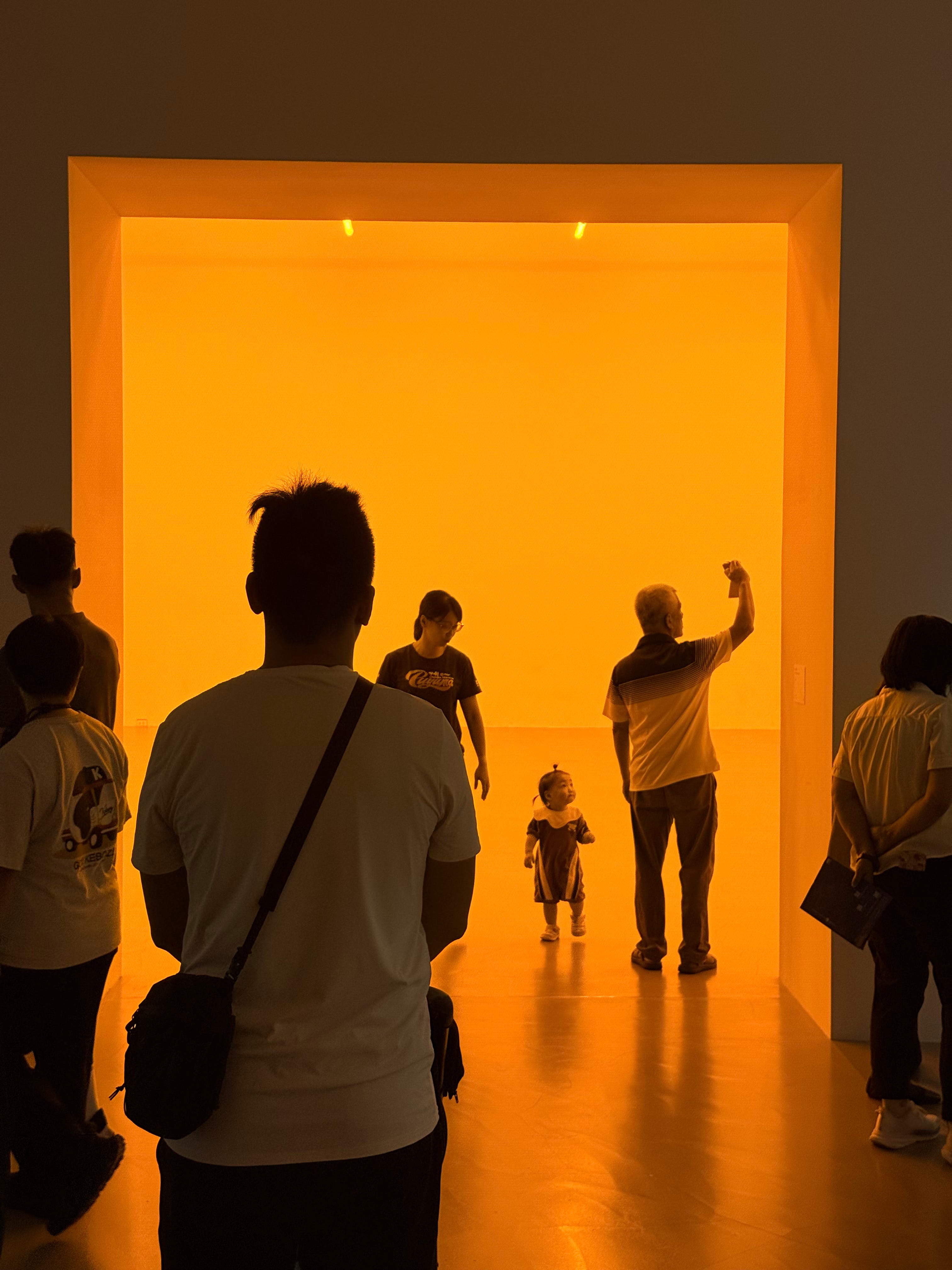
So imagine my delight at the Icelandic art exhibition in Taiwan.


And, of course, elsewhere.


There are two images next to each other here. One is a grotto outside St. Christopher’s Roman Catholic Church. The other is an altar at Wenchang Temple. The Christian expression was not exactly something I’d seen before in this way. As I look at it, the Christian expression here has been in conversation with the one from Taiwan and picked up a few things about statues. One character shapes the other.


This happens all over. At the temples, Chinese folk religion sits alongside Buddhism, Taoism, and sometimes Confucianism. Layer upon layer. And those are down the street from the Shinto influence from Japanese colonialism and American influence at the church over yonder and Evangelical and Catholic influence by way of the Philippines or some other place. One of the things you’ll hear about from the locals is the influx of Malaysian workers. One thing you might see in Taipei Main Station are the signs for the Muslim Prayer Room.


We do a lot of things alongside each other. And they change our character.
One such change was back in the museum in the exhibition by the Icelandic-Danish artist whose work was suddenly in Taiwan. In rooms pitch black, there were bits of light. More characters shaping each other.
Two fountains: one of water and one of mist. I likely understood them differently than the artist and differently from your average person in Taipei on that day. See, for me, one was a sign of Baptism and the other the Holy Spirit. For the artist, who knows. The sign said they were into form inspired by the geography. In Iceland, everything’s a geyser or a fog, maybe. In Taiwan, who’s to say.
What we sit in relationship with changes us.
Ephesians 2:14-18
For he is our peace; in his flesh he has made both groups into one and has broken down the dividing wall, that is, the hostility between us.
He has abolished the law with its commandments and ordinances, that he might create in himself one new humanity in place of the two, thus making peace,
and might reconcile both groups to God in one body through the cross, thus putting to death that hostility through it.
So he came and proclaimed peace to you who were far off and peace to those who were near;
for through him both of us have access in one Spirit to the Father. - NRSVUE
Advent asks us to bring darkness alongside light in a way that changes us. What is brought together is made into something new.
Note: this is the nineteenth in a series of Advent reflections on my summer 2025 pilgrimage to Taiwan. I’ll lean on photos from my trip to carry us, though you’ll find some short writing and some songs to guide you through the season. I hope you’ll consider making a contribution to Taiwan Episcopal Church (you may need to translate the webpage and will need to convert your contribution to New Taiwan Dollars).
A bit about me: I am a seminarian, teacher, and community builder rooted in the Episcopal tradition. After many years as a theatre professor and artistic leader, I am exploring how beauty, ritual, and relationship help people recover their humanity and their hope. Here on Controlled Burn, I write on formation, belonging, and the slow, never-ending work of becoming.