
Cures
Advent at the Edge

A note on context
These “Advent at the Edge” reflections were written during a short season of retreat, pilgrimage, artistic residency, and formation in East Iceland, at Skriðuklaustur, monastic ruins dating from 1493, and the estate home of Icelandic writer Gunnar Gunnarsson, who wrote one of the country’s most beloved novels, Advent, that is often read each Advent season as part of holiday traditions.
The place carries a monastic history, and living there offered a small taste of monastic rhythms: daily patterns, silence, and attention to ordinary work. The setting shaped the pace and tone of the writing. These are first-person reflections from a particular moment and place, little glimpses of this time away.
On return
I am returning to family, parish life, teaching, and ongoing discernment having simply been quiet for a while. Saint Francis famously spent time richly with people and then apart for lengthy stretches and so kept a kind of balance that kept him both in community and in quiet dialogue with the holy. And I kind of like that.
Sometimes places are poetry. The monastery at Skriðuklaustur was a religious community and a hospital. Enhancing its legend is the story of how it came to be, one of them anyway. It goes like this:
A priest from the church down the way, Valþjófsstaður, which dates from the thirteenth century, was visiting the sick and dying in the valley and in his rush he lost his Eucharist supplies. The whole kit. When he arrived at his destination and discovered they were missing, he sent a boy back along the path he had come to find them. Miraculously, the boy discovered a chalice filled with wine and a paten with the host on it. And it is in that spot, they say, the monastery called “Holy Blood” was later established.
That’s one story. Another is that a young woman, Sesselja, married a fourth degree relative which was against the church’s rules at the time). And to save her and her children from the state of sin she found herself in, she donated the Skriða farm she’d inherited from her husband to the church.
In the cloisters, there is an infirmary. There’s another room kept warm by light for both the letting of blood and the writing of books. There’s another thing the place was known for: writing.
When they excavated, they found a little blue rosary bead on the floor of that room.
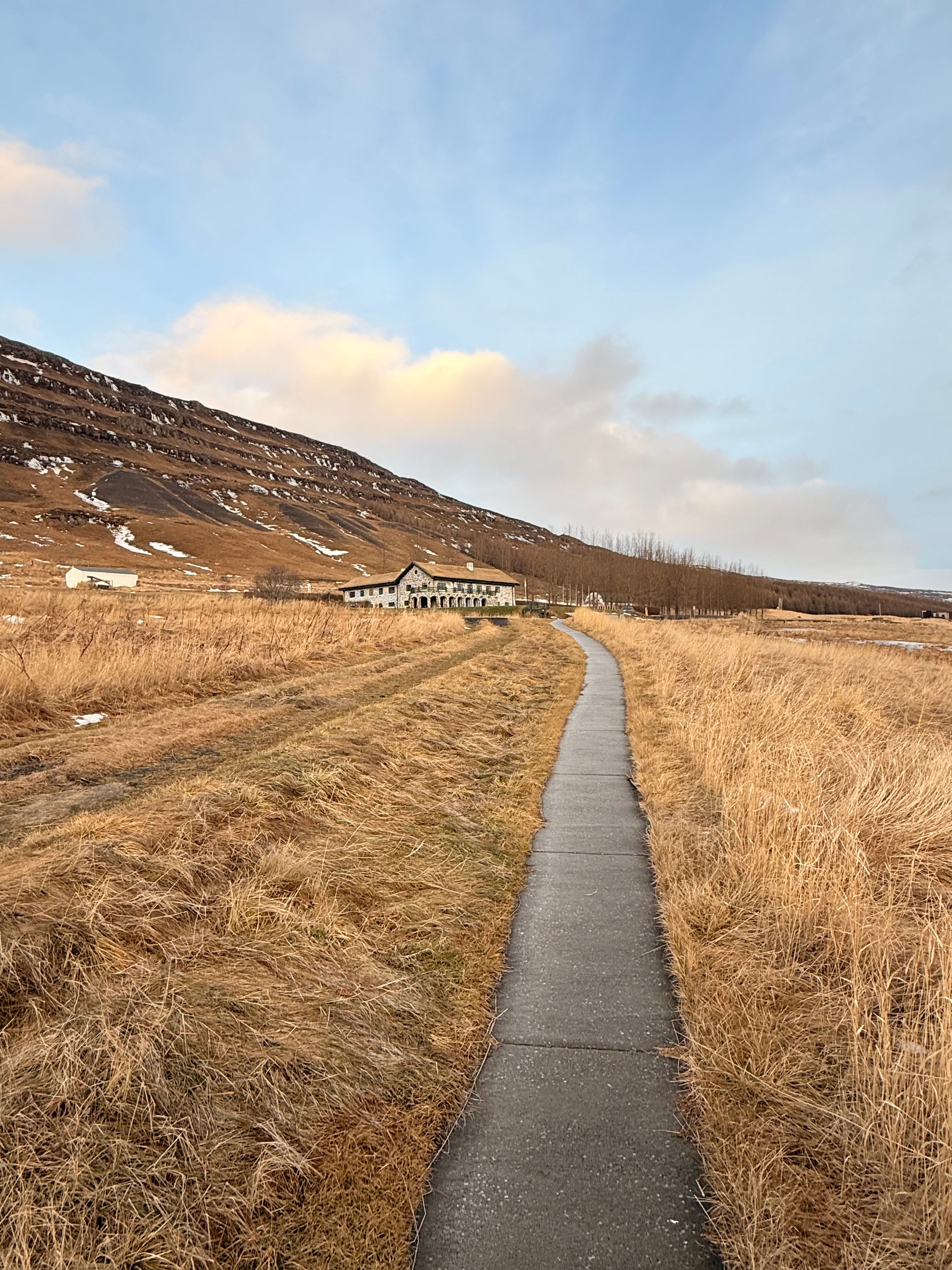
Centuries later, one of the later parishioners of Valþjófsstaður, Gunnar Gunnarsson, born nearby, would leave for Denmark, become a famous writer, and return to build an estate on what he thought were the monastery grounds. He missed by a hundred yards or so. And so today there’s a taught imaginary line between the healing place that made books and cured souls and bodies and which was a cure itself and the place up the hill, the author’s residence where there’s a painting of a landscape on the wall signed Gunnar. And where they invite artists and would-be monks to come sit for a while and cure things.
The director here is interested in writing as a curative process. Cura Animarum. The cure of souls. Me, too. Quick, let’s write our way out. Or curate it.
Whatever it was that caused this place to come into existence – a holy intervention or a notorious sin in need of forgiving, miracle or mercy – it is a place that keeps curing. Keeps tending to the needs. And the blooming of strange things in hard places.